10 … 9 … 8 … 7 … 6 … 5 … 4 … 3 … 2 … 1 …
There was a time when space was not a destination, but a question.
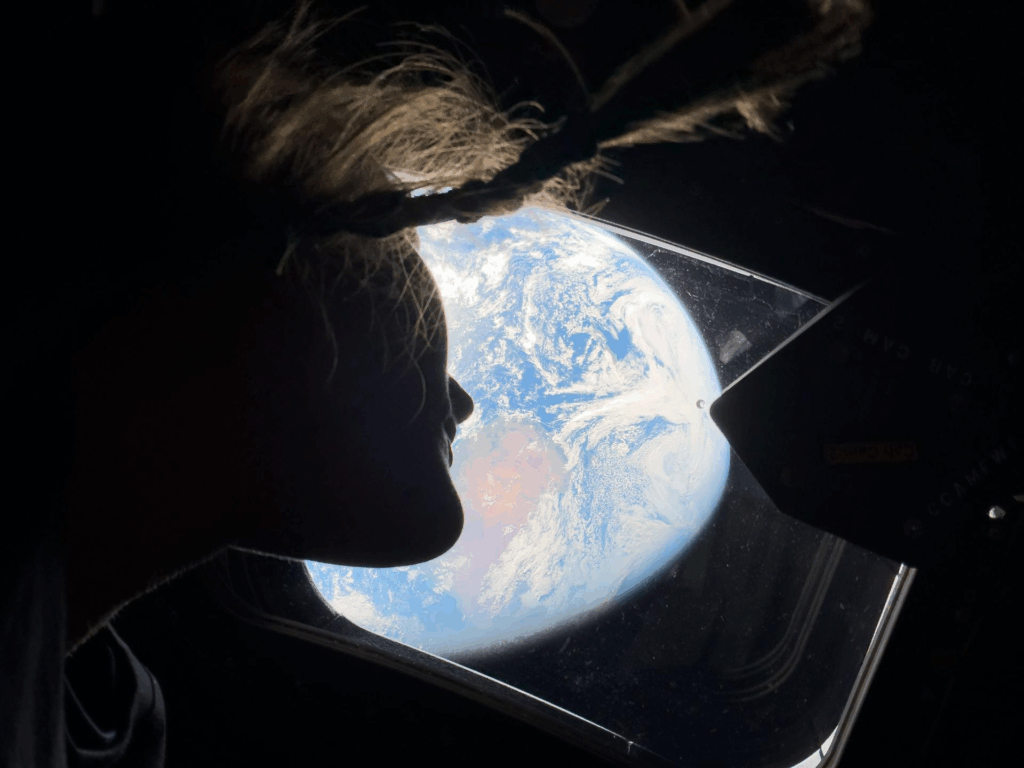
April 12th carries a feeling more than most days. It marks the day humanity took its first steps into space in 1961. Yuri Gagarin’s historic flight upwards shifted our sense of direction and for a fleeting moment the future felt tangible even if its true nature remained a mystery.
That same uncertainty is with us again now.
Just days ago, the Artemis II mission carried four astronauts around the Moon for the first time in over half a century — not to land, but to trace a path and return.
A ten-day journey built around a simple idea: go far, observe, and come back.
It was not an arrival. It was a trajectory.
And that distinction matters.
Because the early space age was never really about destinations. It was about direction, about testing whether the unknown could be reached at all. Artemis II echoes that mindset more than any triumphant landing ever could. It loops through space, guided by gravity, much like the missions that first defined the idea of leaving Earth behind.
During the Cold War, this same tension, between imagination and reality, began to shape sound.
Across the Soviet Union, Eastern Europe, Japan, and beyond, musicians tried to describe something no one had yet experienced. Weightlessness. Distance. Silence. But without a shared language, they had to invent one.
Synthesizers drifted instead of driving. Orchestras stretched into suspended forms. Voices became signals rather than performances.
What emerged was not “space music” as we now recognize it, but something more fragile — a vocabulary still under construction.
That is where today’s broadcast lives.
Not in the familiar landmarks of electronic music, but in the margins. The overlooked recordings. The artists who approached space not as spectacle, but as atmosphere — as a condition rather than a theme.
This is music shaped by possibility, not certainty.
And if you listen closely, the connection between then and now becomes harder to ignore.
The Artemis II crew traveled farther from Earth than any human before them, passing beyond the distance reached even during Apollo-era missions.
They described the experience as surreal — watching Earth rise again over the lunar horizon, seeing the familiar from a distance where it almost stops feeling familiar at all.
More than fifty years later, the view has not become ordinary.
Only repeatable.
The sounds you hear today belong to that space.
Analog dreams. Unfinished futures. Signals sent without knowing who, or what, might receive them.
We are not arriving anywhere today – We are following the motion.